 Tracker Empowerment Foundation
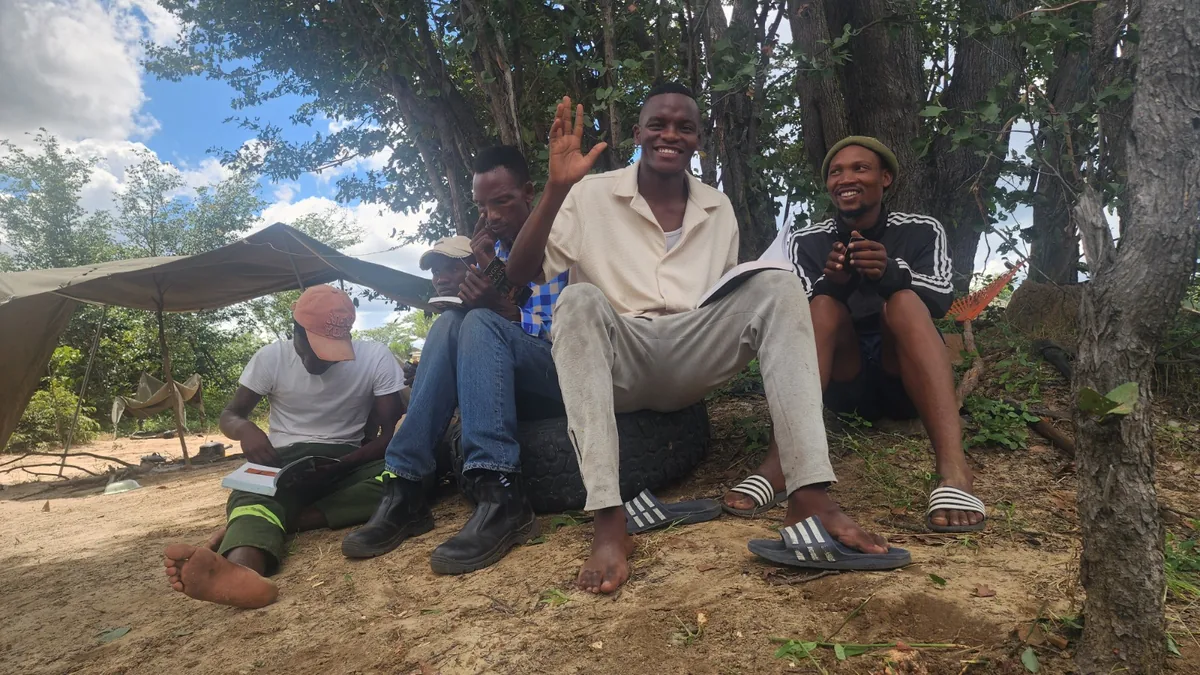
Training and mentoring
We help trackers at every level, from beginners to experienced trackers working toward the highest qualifications. Support can include courses, field training and mentoring by experienced trackers.
Tracker Empowerment Foundation
Tracker Empowerment Foundation supports wildlife trackers and the knowledge they hold. Tracking is one of the oldest human skills. Today, trackers contribute to conservation, research, wildlife management and tourism around the world. Our work helps trackers develop their skills, have that expertise recognized, and make a living from it.
We raise funds to send experienced instructors and CyberTracker Evaluators to trackers in their own communities and landscapes. Training and certification take place where trackers live and work, among the animals and habitats they know best. This builds skills and recognition in places where tracker certification is new or still growing.
We raise funds to bring trackers to places where training and CyberTracker certification are already well established. There, they can learn alongside experienced trackers and evaluators in a different landscape, and advance their skills quickly.
Together, these create a learning and advancement pathway that invests in trackers in their own place and accelerates their progress where the system is well established.
We currently have projects and collaborations in:
Southern, Central, East and West Africa, and Madagascar
Laos, Thailand and Sri Lanka
The United Kingdom and mainland Europe
The United States, Canada and Mexico
Brazil
We are constantly expanding into new regions and building new relationships.
We support trackers who show commitment, passion and aptitude for tracking. We focus equally on trackers who are less well represented in the global tracking community, including local and Indigenous trackers, and women.
Trackers at every stage, from those just starting out to those holding CyberTracker's highest qualifications, Senior Tracker™ and Master Tracker™
Indigenous and local communities with deep tracking traditions and sense of place
CyberTracker Evaluators and tracking instructors
Conservation organizations, protected areas and wildlife reserves
Universities, researchers and students
Organizations that employ trackers in conservation, research and tourism
We help trackers at every level, from beginners to experienced trackers working toward the highest qualifications. Support can include courses, field training and mentoring by experienced trackers.
CyberTracker Tracker Certification, run by CyberTracker Conservation, is the International Gold Standard for assessing tracker skills. It gives trackers an independent, recognized record of their skills in identifying tracks and signs and in trailing animals. We fund training opportunities that prepare trackers for the certification these programs culminate in, either in their own place or at established training centers. As CyberTracker certified trackers, instructors and evaluators, we personally guide the research, training and certification we are involved in.
Recognized skills open doors to work as trackers, guides, field researchers and wildlife monitors. We support projects that connect trackers with employment and professional development.
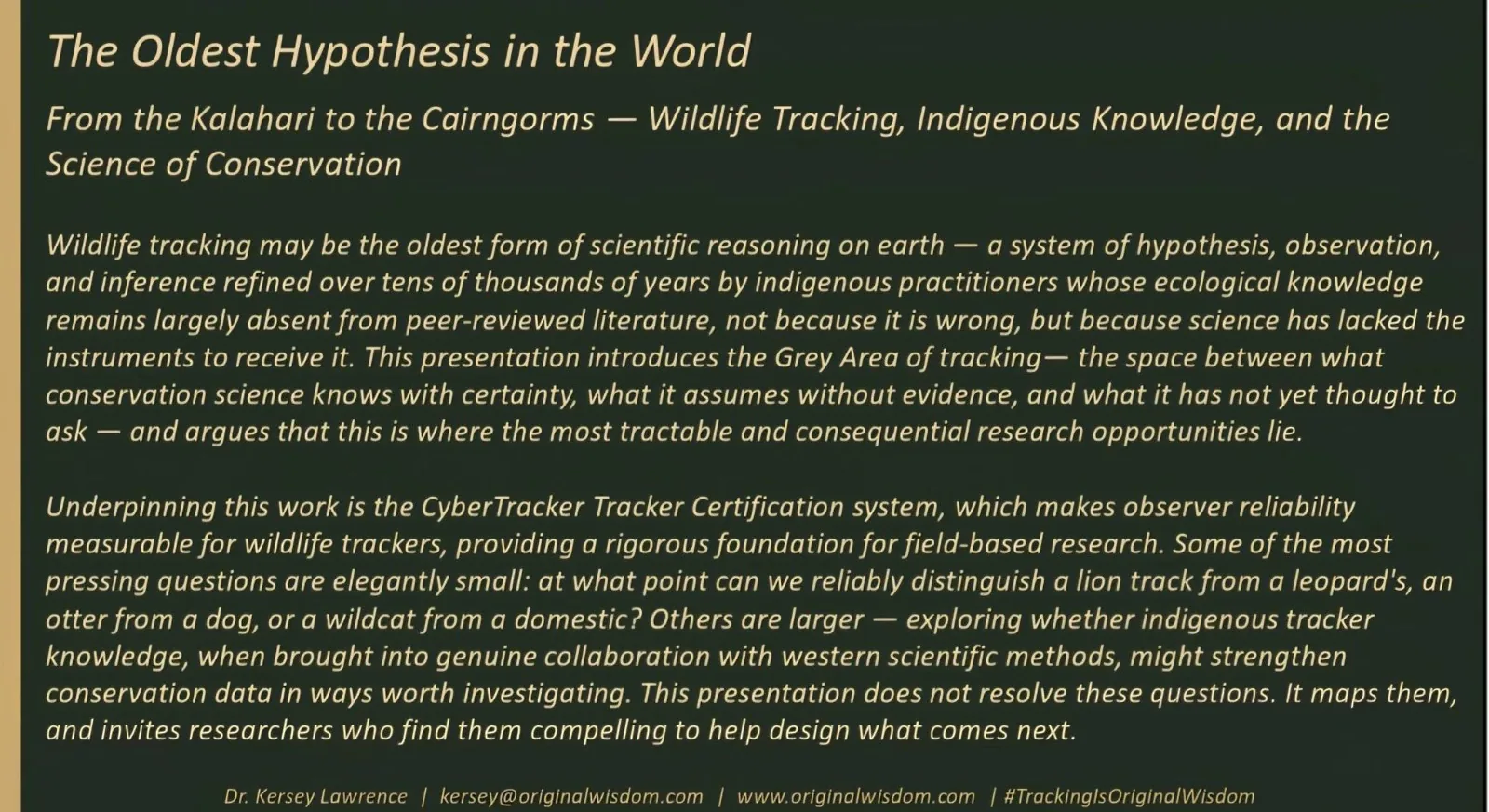
We support track-based research that brings Indigenous, local and academic knowledge together. Trackers take part as skilled contributors, and students and researchers learn from them.
This is conservation research in the full sense: it includes people as well as animals. Quantitative work uses data, statistics and models to study animals, their behavior, their habitats and the accuracy of tracker observations. Qualitative work explores the human dimensions of tracking: how trackers learn, what their knowledge means to them and their communities, and how tracking shapes people's relationships with wildlife and the land. People are part of nature and depend on it, as it depends on them.
Much of this research is guided by the Grey Area, a research program developed by Dr. Kersey Lawrence, the Foundation's President. It asks where the boundary lies between what the evidence on the ground can show and what a tracker believes it shows. Some readings of tracks and signs are certain. Some fall in the Grey Area, where the evidence supports more than one interpretation. Some cannot be answered at all. Uncertainty in the Grey Area is not failure. Recognizing it accurately is part of expertise. Research into tracker accuracy and reliability helps make trackers' knowledge a stronger contribution to conservation.
We value each of these ways of knowing for its own strengths, and none is placed above another. Indigenous and local knowledge, built over generations of living with animals, sees things that academic study can miss. Scientific methods, such as measuring accuracy and verifying with cameras, can test what the eye alone cannot. Used together, they see further than either does alone.
For the research projects we are directly involved in, we provide equipment such as camera traps, data-collection devices and field gear. Equipment stays tied to the work of those projects and the trackers taking part in them.
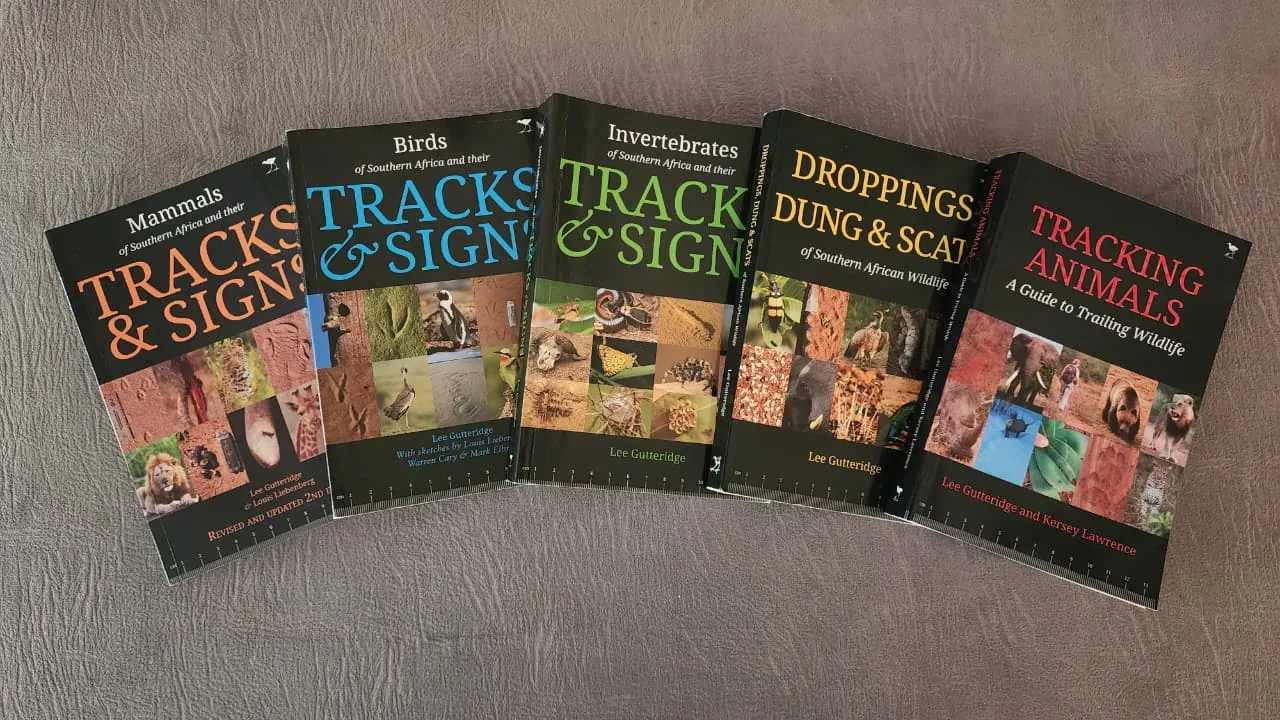
We publish new research in books, scientific journals and online, so that what we learn reaches trackers, researchers and conservation practitioners. We also help communities share their own knowledge on their own terms: collaborating with researchers, coauthoring publications, or publishing independently.
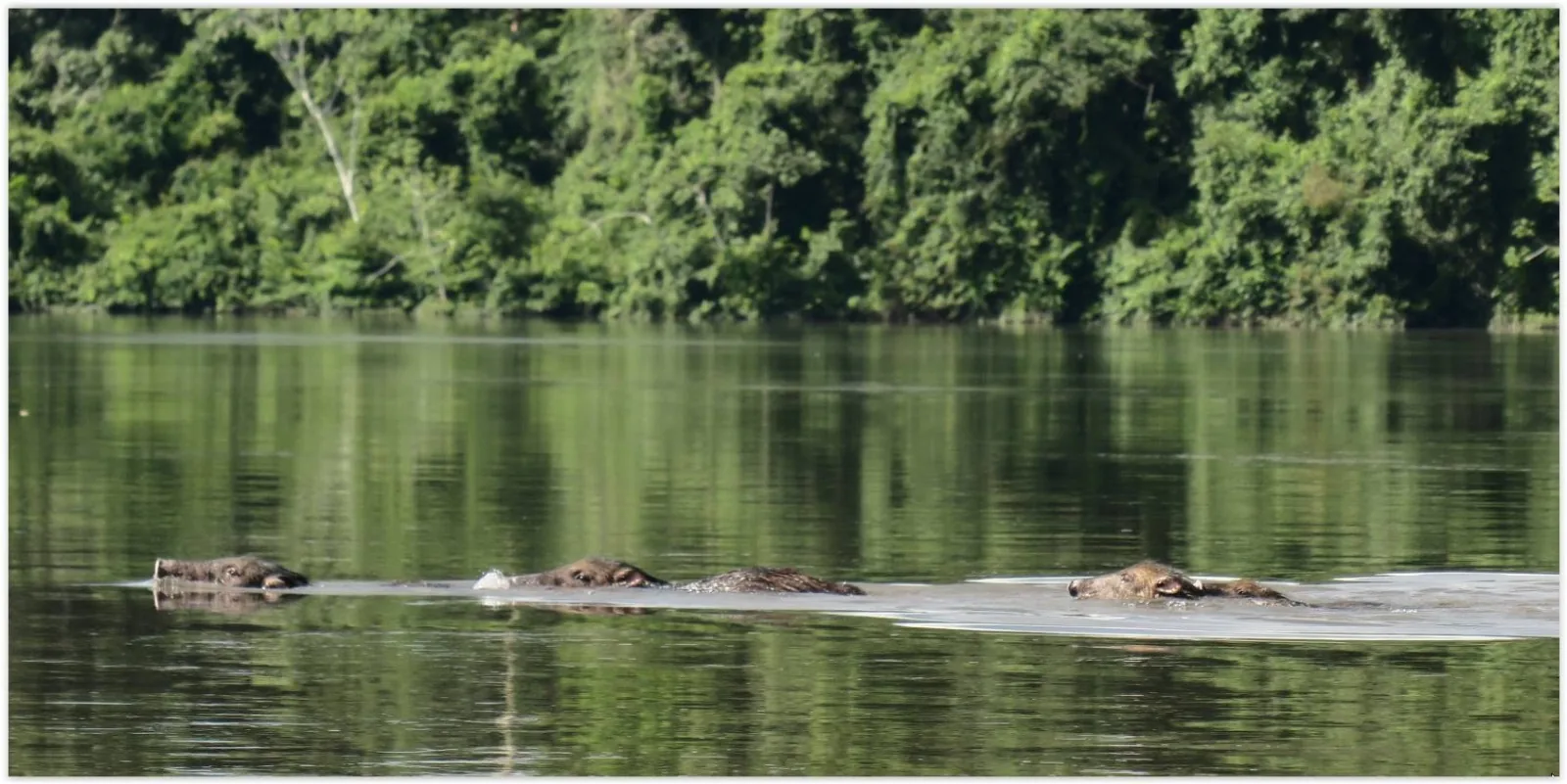
White-lipped peccary swimming across the Amazon river, by Juarez Pezzuti
Tracking knowledge lives in communities. We support community-led initiatives that keep this knowledge alive and help pass it on to the next generation.
We work through partnerships, grants and support for both groups and individuals. We identify the trackers and projects we support through long-term relationships with trackers, communities, evaluators and partner organizations. Projects are shaped with the people involved, and grow out of what trackers and their communities identify as their needs. We work internationally, wherever there are trackers and wild places.
Partner with us
If your organization works with trackers, guides, conservation projects or communities, we'd love to find ways to support the people doing the work. Reach out and tell us what you're building.
Get involved
Every contribution helps seat another tracker at the table, fund another mentorship, and back the science that proves what trackers already know.
Donate →